 Legis360
Overview
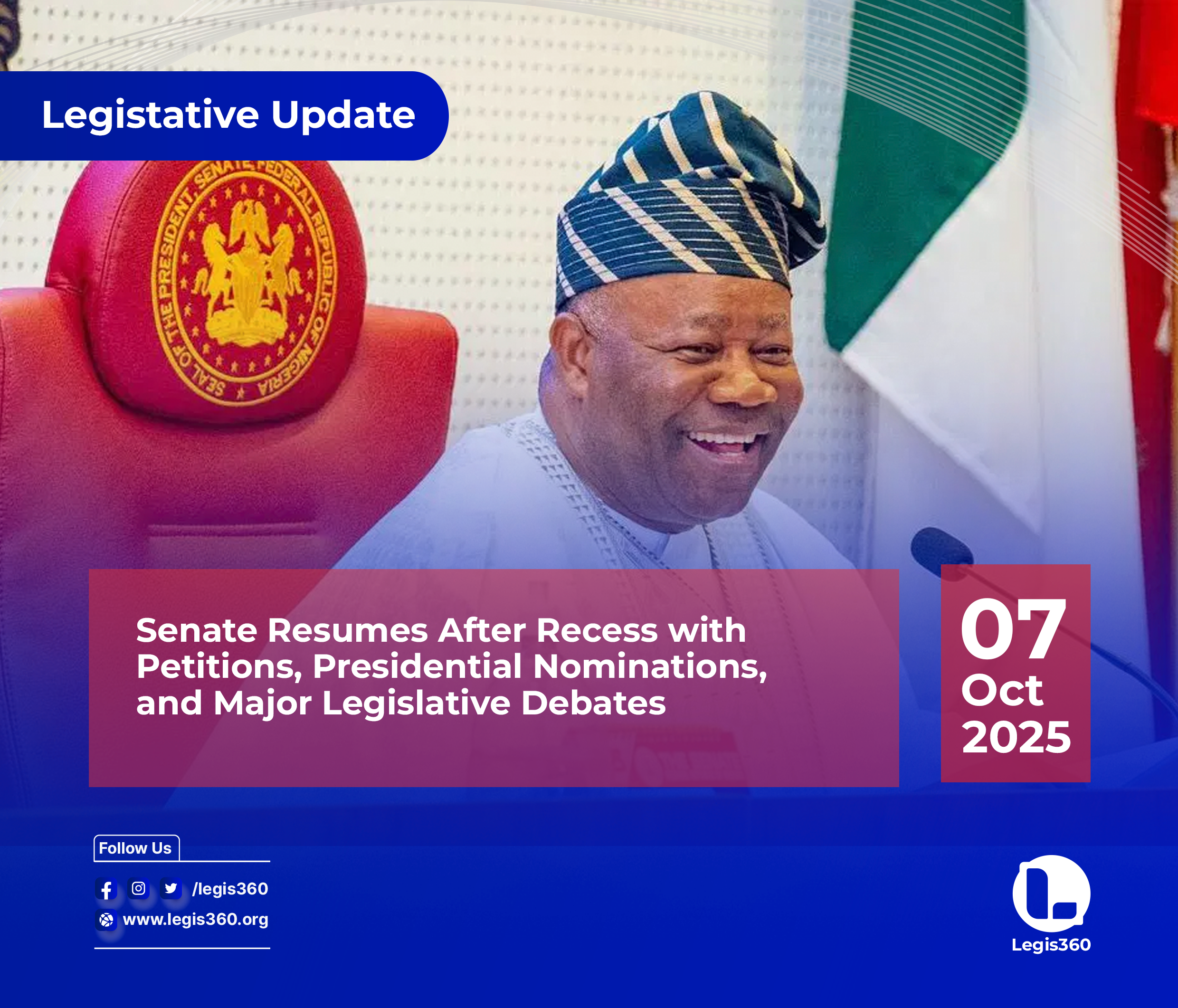
The Senate on Wednesday, 22 July 2026, passed for second reading the Foreign Aid Regulation, Transparency and Inclusion Bill, 2026 (SB1034), a proposed law that would compel non-governmental organisations and other recipients to register every foreign aid and donor-funded project with the Federal Government. Senate President Godswill Akpabio confirmed the passage by voice vote after a majority of senators backed the proposal during plenary.
The bill, sponsored by Senator Ibrahim Dankwambo (Gombe North), a former Accountant-General of the Federation and former Governor of Gombe State, was first read on 6 May 2026. After second reading, it was referred to the Senate Committees on National Planning and Economic Affairs, Finance, and Foreign Affairs, which were directed to hold a public hearing and report back within four weeks.
What the bill proposes
Leading the debate, Senator Dankwambo argued that "billions of naira in foreign aid are channelled to NGOs operating in Nigeria without adequate scrutiny of the sources of the funds or the purposes for which they are donated." He warned that the absence of effective oversight poses serious national security risks and undermines public accountability.
He described foreign aid management in Nigeria as largely opaque and fragmented, with donor-funded projects scattered across ministries, departments and agencies, and many implemented outside the national budget. The problem, he said, is not the absence of institutions but the absence of a binding legal framework that coordinates them. The bill would anchor a single statutory framework on existing bodies such as the Ministry of Finance, the Budget Office, the Debt Management Office and the Office of the Accountant-General, consistent with the Fiscal Responsibility Act, 2007.
As presented on the floor, the bill rests on five pillars:
- A national coordination framework for donor funding, anchored on existing institutions to avoid new bureaucracy.
- Mandatory registration and a national database of all foreign aid and donor-funded projects.
- Integration of donor-funded interventions into national budgets and alignment with national development priorities.
- Mandatory public disclosure of funding sources, project details and outcomes.
- Sanctions for non-registration, diversion, misuse, false disclosure and the implementation of unapproved projects.
The debate on the floor
Most senators who contributed supported the bill. Senate Chief Whip Tahir Monguno (Borno North) said many foreign donors channel financial assistance through NGOs without adequate scrutiny. Deputy Senate President Barau Jibrin noted that while assistance received directly by the Federal Government is usually reflected in the budget, substantial funds routed to NGOs and state governments remain outside effective public oversight. "We can't tell what money goes into the coffers of NGOs. Fraudsters set up bogus, pseudo NGOs and collect money from there," he said.
Senator Adamu Aliero (Kebbi Central) said stricter compliance would improve the use of donor funds and strengthen development partners' confidence, and urged that the law expressly cover state governments in addition to NGOs. Senator Sani Musa (Niger East), chairman of the Committee on Finance, said the framework would align Nigeria with global best practice and improve fiscal planning, while cautioning about security. "Most of the aids coming to so-called NGOs are not subjected to scrutiny. We have seen instances where such arrangements create security concerns because we do not know who is accounting for what. Is it insurgents taking money meant for victims?" he asked.
Senator Adams Oshiomhole (Edo North) drew a useful distinction that is likely to shape the public hearing. In his view, funds accruing to the government from any source ought plainly to be reported and subject to Senate oversight. The part that "people who might choose to misunderstand" the bill, he said, is the requirement of full disclosure of resources transferred to NGOs and civil society organisations, which he argued should be backed by stiff sanctions for non-compliance. In his closing remarks, Akpabio warned that unregulated foreign funding could become a national security threat if left outside an effective regulatory framework.
Where the law stands today
Nigeria hosts thousands of NGOs implementing projects funded by foreign governments, multilateral institutions, international charities and private foundations, cutting across humanitarian relief, health, education, agriculture, governance, climate, human rights and poverty reduction. Many operate in partnership with federal and state governments; others work independently, particularly in conflict-affected states where humanitarian needs are high.
At present, NGOs are required to register with the Corporate Affairs Commission, and some also register with the Special Control Unit against Money Laundering under the EFCC to comply with anti-money laundering rules. There is, however, no comprehensive law requiring NGOs to disclose all foreign donor-funded projects to the Federal Government or to integrate those interventions into the national budget. SB1034 is designed to fill that gap.
Legis360's read
The transparency case is real. Off-budget donor flows are genuinely hard to track, and both citizens and honest implementers benefit when there is a clear record of who is funding what, and to what effect. A single database and a coordination framework anchored on existing institutions could reduce duplication and improve how Nigeria plans around external assistance.
The design details, however, will decide whether the law strengthens accountability or narrows civic space. As the bill moves to public hearing, the questions worth watching are practical ones: How broadly is "foreign aid" defined, and does it sweep in ordinary grants to independent civil society, research and the media? Is registration a light-touch notification or a discretionary licence that can be withheld or revoked? What safeguards protect legitimate organisations and the personal data disclosed under the scheme, and how does the framework interact with existing CAC and SCUML obligations rather than duplicating them? Senator Oshiomhole's own caveat, that the NGO-disclosure element is the part most likely to be misunderstood, is a signal that these safeguards deserve careful drafting.
For NGOs, donors and companies delivering donor-funded programmes, the sensible move now is to engage the public hearing early, document funding sources and outcomes cleanly, and follow the committee stage closely. Legis360 will track SB1034 through committee and report back as the text firms up.
What happens next
The bill now goes to the Senate Committees on National Planning and Economic Affairs, Finance, and Foreign Affairs for a public hearing, expected within four weeks, before returning to the Senate for further consideration.
Track the full record, readings and status of SB1034 on the Legis360 platform: Foreign Aid Regulation, Transparency and Inclusion Bill, 2026.
Reporting drawn from the Senate plenary of 22 July 2026, monitored by Legis360, with additional detail from The Nigeria Lawyer.